

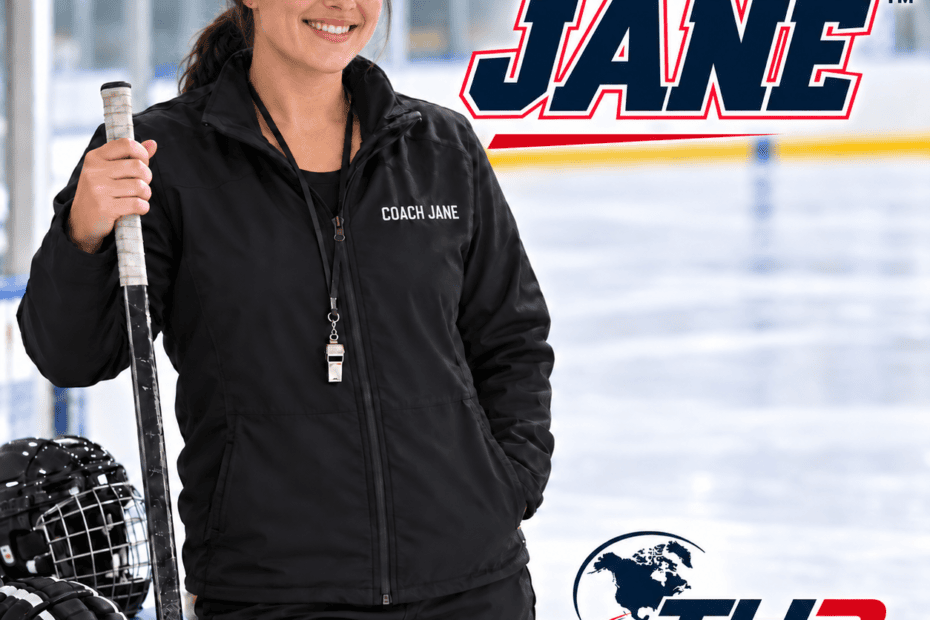
SKATE FIRST. PUCK SECOND.™ Start Skating before extra stickhandling takes over. Coach Jane™ teaches girls to create motion first, then control the puck while their feet keep working.
Start Skating Before the Puck Move
Start Skating first so the puck skill travels with the Player. As a result, defenders must react to movement instead of waiting for a stationary puck move.
Coach Jane™ 10-Second Hockey Lesson™
Presenter script: “Hi, Coach Jane here. Move your feet first. Get yourself skating, then handle the puck while you move. Skate first. Puck second.”
Build the Habit of Moving First
Players can become so focused on the puck that their feet stop. Start with a short skating route, add the puck only after the Player is moving, and keep the first repetitions simple.
The objective is not maximum speed. It is learning that skating creates time, space, and better puck options. Once the movement is comfortable, add changes of direction or light pressure.
Coach Jane™ by Age
U5–U7 • U8–U10 • U11–U14 • U15–U18 • Junior
U5–U7 + U8–U10 — Feet First
Take two or three skating pushes before beginning a simple puck carry.
U11–U14 — Carry the Puck in Motion
Keep your feet active while carrying the puck through open space. Avoid unnecessary stationary stickhandling.
U15–U18 + Junior — Use Skating to Create the Play
Use changes of pace and direction before relying on extra stickhandling. Make the defender react to your feet.
5 Smart Ways to Start Skating Before Handling the Puck
Start Skating before extra stickhandling takes over. Skating creates the time and space that make puck skills useful. The Player who moves first forces defenders to react to both feet and puck.
1. Move Before You Add the Puck
Practice the skating route first. Once the Player can move through the route comfortably, add the puck without changing the skating habit.
2. Keep the Feet Active
Do not let stickhandling turn into standing still. Start Skating and keep enough movement that the puck skill travels with the Player.
3. Use Skating to Create Separation
A change of pace, angle, or direction can make the defender move before the puck move happens. That creates more room for the hands to work.
4. Keep the Head Up
Strong puck control should not require constant staring at the puck. Build enough comfort that the Player can scan pressure, support, and open ice while skating.
5. Choose the Puck Move After the Skating Move
Do not decide on a deke before reading the defender. Use skating first, then choose the puck move that fits the space the defender gives you.
Practice Skating Before Stickhandling
Use short routes with one change of pace or direction. Have Players complete the route without a puck, then repeat it with the puck while keeping the same skating rhythm.
Continue with Bend Your Knees and Stay Balanced and Change Speed to Create Space.
Coach Jane’s Takeaway
Your stick can help control the puck, but your skates create the space to use it.
SKATE FIRST. PUCK SECOND.™
Keep Learning With Coach Jane
Take this lesson to your next practice, then continue with Bend Your Knees and Stay Balanced and Look Before You Pass.
ONE LESSON. ONE INSTRUCTION. ONE TAKEAWAY.™
Part of Coach Jane™ 10-Second Hockey Lessons™. Presented by The Hockey Tournament Resource™.
As always, thank you for being part of The Hockey Resource Community.
AMAZON Hockey https://thehockeyresource.com/hockey-products-amazon/
NEW Tournament Search APP
https://play.google.com/store/apps/details?id=com.hockeyresource.hockeytournamentapp&hl=en_CA&pli=1
GUMROAD – eBooks
https://thehockeyresource.gumroad.com/
SEE My Interview with the Mental Health Academy
https://www.buzzsprout.com/1824112/episodes/13519482
https://thehockeytournamentresource.com/parent-questions-your-answers/
HOW WE REACHED THE HOCKEY ANSWER™
At The Hockey Tournament Resource™, we believe Hockey families, Players, Coaches and Officials deserve more than opinions. They deserve answers supported by research, experience and practical understanding of the game.
Every question begins with something Hockey people genuinely want to know.
OUR RESEARCH PROCESS
- WE FIND REAL QUESTIONS. We investigate what Hockey Players, Parents, Coaches and Officials are asking and searching for.
- WE SEARCH THE WORLD FOR ANSWERS. We examine relevant Hockey knowledge, coaching practices, available research and expert perspectives from around the world.
- WE COMPARE THE EVIDENCE. We look beyond individual opinions, consider different approaches and identify where the strongest available evidence points.
- WE APPLY REAL HOCKEY EXPERIENCE. We consider how the findings apply to actual Hockey situations, including different ages, skill levels and stages of development.
- WE DELIVER A PRACTICAL ANSWER. We explain what our research suggests, why it matters and what Hockey people can do with that information.
We recognize that not every Hockey question has one perfect answer. Age, ability, experience and individual circumstances can change what works best.
Our commitment is to provide thoughtful, practical answers while being clear about what the evidence supports and where uncertainty remains.
REAL CURRENT QUESTIONS. REAL CURRENT RESEARCH. REAL CURRENT ANSWERS.™
SEARCH THE WORLD FOR ANSWERS.™
The Hockey Tournament Resource™
LEARN WHEN IT FITS YOUR LIFE.™
