

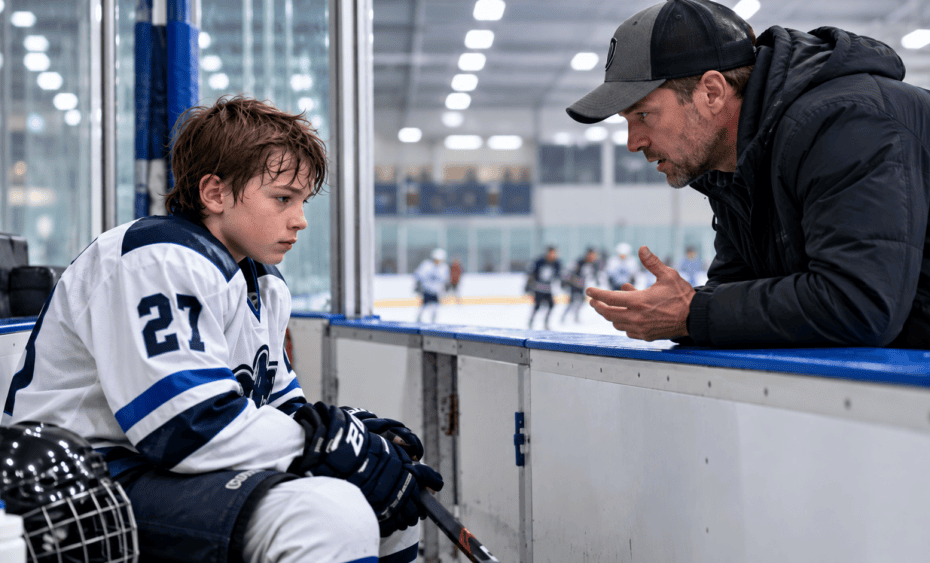
Nine lessons every Minor Hockey Parent should understand before chasing the next level.
THE HOCKEY RESOURCE™ | HOCKEY PARENT INTELLIGENCE™ | MAKING HOCKEY FUN™
The Hockey dream begins with a child. Sometimes the pressure begins with a parent.
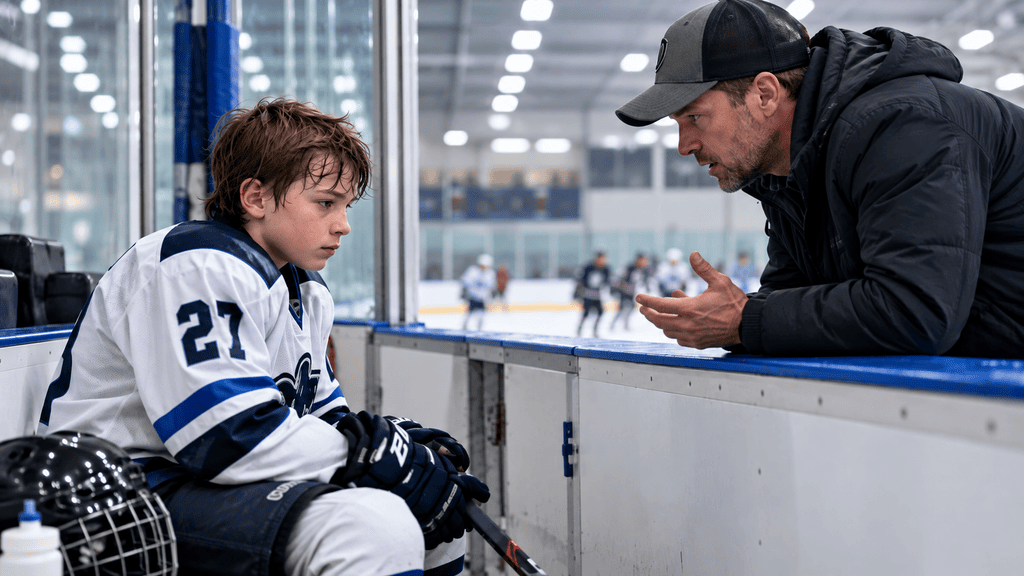
It usually starts innocently.
A five-year-old steps onto the ice for the first time. The skates are uncomfortable, the equipment feels enormous, and standing up becomes an accomplishment.
The child falls, gets back up, chases a puck, and smiles.
For many Hockey families, that moment is the beginning of something wonderful.
Then something changes.
A parent notices another Player skating faster. Someone mentions AAA Hockey. Another family signs up for private lessons. A Coach suggests additional training.
Suddenly, Hockey can become a competition between parents to determine who is providing their child with the greatest opportunity.
By U9, some families are already worrying about development pathways. By U11, AAA versus AA can dominate conversations. By U13, questions about exposure, spring Hockey, expensive camps, and specialized training become increasingly common.
By U15, families may be discussing Junior Hockey, scholarships, and opportunities hundreds of kilometer from home.
But somewhere along that journey, we need to ask an important question.
Is the child still enjoying Hockey as much as the parent enjoys watching the child play?
Here are nine lessons every Hockey Parent should consider.
1. The desire to play Hockey must come from the Player.
Parents can purchase equipment, arrange practices, register for tournaments, and provide transportation.
They can’t buy genuine motivation.
A child who loves Hockey will often find reasons to play. They may shoot pucks in the driveway, ask to attend public skating, or spend time practising something they want to improve.
That motivation matters.
However, not every enthusiastic young Player demonstrates their passion in the same way. Some love games more than practice. Others enjoy teammates, the dressing room, or learning new skills.
A seven-year-old should not have to demonstrate the commitment of a seventeen-year-old.
What Hockey Parents should do: Encourage participation without turning every opportunity into an obligation.
Pay attention to what excites your child about Hockey.
Ask whether they want more Hockey before automatically registering them for another program.
THE HOCKEY RESOURCE ANSWER™
A parent’s responsibility is to provide opportunities. The Player must gradually develop the desire to pursue them.
2. Make certain your child loves Hockey, not simply the attention Hockey brings.
This is one of the most difficult questions a Hockey Parent can ask.
Does my child love playing Hockey?
Or does my child love how happy I become when they play well?
Children notice parental reactions.
They recognize excitement after scoring a goal, disappointment after a poor game, and frustration when they receive limited ice time.
Some Players begin associating their value with their Hockey performance.
Consider a young Player who scores twice on Saturday and receives enthusiastic praise.
On Sunday, the same Player struggles, makes several mistakes, and spends much of the drive home listening to criticism.
What lesson might that child learn?
That Hockey performance determines parental approval.
This is particularly important for Parents who have played or coached competitive Hockey themselves. Their experience may help them understand the game, but it does not automatically mean their child shares the same ambitions.
What Hockey Parents should do: Celebrate effort, improvement, teamwork, and character.
Show an interest in your child’s life beyond the rink.
Make certain your child understands that parental love and approval are never dependent on goals, assists, saves, or Team selection.
THE HOCKEY RESOURCE ANSWER™
Your child should never feel that playing better Hockey is the price of earning your approval.
3. The car ride home can matter more than the final score.
Imagine two Hockey Players leaving the arena after a difficult loss.
The first gets into the family vehicle and hears:
“Why didn’t you shoot?”
“You should have passed.”
“Your Coach shouldn’t have put that line out.”
The second Player gets into the vehicle and hears:
“I enjoyed watching you play.”
“Are you hungry?”
Both Players experienced the same result.
Their emotional experience afterward may be entirely different.
The car ride home should not become a second coaching session.
Players generally know when they have made mistakes. Goalies certainly understand when a puck has entered their net.
An immediate technical analysis is rarely what a disappointed child needs most.
What Hockey Parents should do: Let the Player decide whether to discuss the game.
When they want to talk, listen first.
If they ask for feedback, keep it constructive, appropriate to their age, and limited to what they can control.
There is nothing wrong with discussing Hockey. The problem begins when every game becomes an unavoidable performance review.
THE HOCKEY RESOURCE ANSWER™
After the game, be the parent your child needs, not another Coach they didn’t ask for.
4. Teach your child how to lose a Hockey game without losing confidence.
Hockey provides countless opportunities to experience disappointment.
A Team loses a championship game.
A Player misses a breakaway.
A Goalie allows the winning goal.
A child is not selected for the Team they hoped to make.
These experiences can be painful. They can also provide important opportunities to develop resilience.
But resilience does not come from humiliation.
Telling a disappointed Player to stop crying, toughen up, or hate losing is not the same as teaching emotional control.
The better approach is to acknowledge disappointment while helping the child understand that one result does not define them.
A Goalie who allows five goals is not automatically a poor Goalie.
A Player who fails to make AAA is not automatically less capable of future improvement.
A championship loss does not erase an entire season of development.
What Hockey Parents should do: Allow disappointment without treating it as a crisis.
Later, help your child identify one constructive lesson.
Acknowledge the opposition, respect the officials, and demonstrate good sportsmanship yourself.
THE HOCKEY RESOURCE ANSWER™
Losing a Hockey game should be an experience a Player learns from, not a verdict on who that Player is.
5. More expensive Hockey does not automatically mean better Hockey development.
This may be the most commercially important lesson for Minor Hockey families.
Every season, parents face decisions involving:
- AAA versus AA or A Hockey
- Additional private coaching
- Spring and summer Hockey
- Specialized Goalie development
- Hockey academies and camps
- Out-of-town tournaments
- Junior Hockey opportunities
These programs can provide real value.
But value depends on what the individual Player actually needs.
Consider a U11 Player receiving limited ice time on a highly competitive AAA Team.
Would that Player develop more effectively playing significant minutes at AA?
Possibly.
More meaningful puck touches, game decisions, confidence, and opportunities to apply newly learned skills could outweigh the prestige of the higher Team designation.
However, the opposite can also be true.
An advanced Player receiving quality coaching and appropriate competitive challenges at AAA may benefit from remaining there.
The correct answer depends on the Player, the Coaches, the competition, and the development environment.
The same principle applies to Goalies.
A younger Goalie may benefit more from a qualified Goalie Coach and appropriate game opportunities than from simply joining the highest-ranked Team available.
Private training can be valuable when it addresses a specific developmental need. It becomes questionable when families purchase it primarily because everyone else is doing so.
What Hockey Parents should do: Before purchasing another Hockey program, ask three questions.
- What specific skill or development problem will this program address?
- Is the instruction appropriate for my child’s age, ability, and current needs?
- Does the expected benefit justify the financial, physical, and family commitment?
THE HOCKEY RESOURCE ANSWER™
Do not confuse the price of a Hockey opportunity with the quality of Hockey development.
6. Support your child regardless of the Team, level, or playing time.
A child who makes AAA deserves encouragement.
So does the child who makes AA, A, BB, B, or House League.
The Team designation may describe the competitive environment. It does not describe the child’s worth.
Unfortunately, some parents become emotionally attached to the level their child plays.
They may interpret a move to a lower level as a personal embarrassment or failure.
Children notice these reactions.
A Player who might genuinely enjoy a different Hockey environment can begin feeling that accepting that opportunity means disappointing the family.
The danger is particularly significant during adolescence, when Players are developing their identity and becoming more aware of social comparisons.
What Hockey Parents should do: Measure progress against your child’s own development rather than constantly comparing them with teammates.
Celebrate the Player who works hard to improve skating.
Encourage the Goalie who develops better positioning.
Recognize the Defenceman who makes good decisions even when nobody notices.
Most importantly, let your child enjoy being part of a Team.
THE HOCKEY RESOURCE ANSWER™
A Player’s Hockey level may change. Parental support should not.
7. Allow your child to develop a relationship with their Coach.
A Player comes home disappointed about playing time.
Another believes the Coach is being unfair.
A Goalie is frustrated about not receiving the next start.
The parent’s instinct may be to contact the Coach immediately.
Sometimes intervention is necessary, especially when safety, bullying, discrimination, abuse, or other serious concerns are involved.
But routine Hockey disagreements can provide valuable opportunities for Players to develop communication and problem-solving skills.
An older Player should gradually learn to ask appropriate questions.
“What should I work on to earn more ice time?”
“How can I improve my defensive positioning?”
“What can I do to be better prepared for my next start?”
These conversations help Players accept responsibility for their own development.
That does not mean parents must remain silent when a situation is genuinely inappropriate.
It means distinguishing between an uncomfortable developmental challenge and a problem requiring adult intervention.
What Hockey Parents should do: Encourage age-appropriate communication with the Coach.
Avoid conducting every discussion on your child’s behalf.
When intervention is necessary, follow appropriate Team and association procedures.
THE HOCKEY RESOURCE ANSWER™
Help your child learn to speak with a Coach instead of automatically speaking for them.
8. Do not sacrifice the entire family chasing an uncertain Hockey future.
Hockey can become extraordinarily demanding.
Tournament weekends consume family time.
Travel creates expenses.
Private lessons, Team fees, equipment, hotels, and additional programs can place substantial pressure on household finances.
For some families, Hockey influences where they live, where their children attend school, and how they organize their entire year.
These decisions deserve careful consideration.
There is nothing inherently wrong with a highly committed family supporting an ambitious Player.
However, the commitment should be proportionate to the child’s own goals, current opportunities, and realistic development needs.
Not every talented twelve-year-old needs to relocate.
Not every promising Goalie needs an expensive academy.
Not every Player benefits from twelve months of organized Hockey.
Hockey Canada’s Long-Term Player Development framework emphasizes age-appropriate development, individual differences, and a long-term approach.
Young athletes also benefit from developing broad movement skills and participating in different physical activities.
Parents should recognize that additional Hockey is not always the same thing as better development.
What Hockey Parents should do: Discuss the commitment with the Player and the entire family.
Establish realistic financial boundaries.
Protect time for education, friendships, recovery, and family life.
Remember that the needs of siblings matter too.
THE HOCKEY RESOURCE ANSWER™
Supporting a Hockey dream should not require sacrificing every other part of childhood.
9. Sometimes the best Hockey Parent is the one who says less.
Walk into almost any Minor Hockey arena and listen.
“Shoot!”
“Skate!”
“Pass it!”
“Get back!”
“Cover the point!”
Parents issue instructions from the stands while Coaches provide different directions from the bench.
The Player must process both while making decisions in a fast-moving game.
Now consider a young Goalie.
A parent reacts visibly to every shot, save, rebound, or goal against.
Even without direct criticism, the Goalie may become increasingly concerned about how that parent is responding.
Hockey requires concentration, confidence, anticipation, and independent decision-making.
Constant commentary can interfere with those requirements.
It can also make Players more concerned about avoiding mistakes than trying to make good plays.
A child who fears making mistakes may become reluctant to carry the puck, attempt a creative pass, challenge an opponent, or try a new skill.
Yet those decisions are part of learning Hockey.
What Hockey Parents should do: Cheer effort and positive play without trying to direct every decision.
Let the Coach provide technical instruction.
Respect referees, opposing Players, and other families.
Most importantly, allow your child to play without feeling evaluated on every shift.
THE HOCKEY RESOURCE ANSWER™
The stands should be a place of encouragement, not a second Team bench.
THE HOCKEY RESOURCE™ – ONE FINAL QUESTION FOR PARENTS
Imagine your child finishes playing competitive Hockey at eighteen.
There is no Junior Hockey contract.
No college scholarship.
No professional opportunity.
Their Hockey career continues recreation, perhaps through adult leagues, coaching, or simply enjoying the game with friends.
Would you consider those years a success?
Think carefully.
Your child may have learned how to work with teammates, manage disappointment, accept criticism, overcome challenges, and develop lifelong friendships.
They may have travelled with their family, experienced tournaments, scored memorable goals, made important saves, and worn a Team jersey with pride.
Those experiences have value even when they do not lead to a professional career.
And if your child does have the passion, ability, and opportunity to pursue elite Hockey, your encouragement, guidance, and willingness to make thoughtful decisions can help them along that path.
The objective is not to discourage ambition.
It is to ensure ambition belongs to the Player.
THE HOCKEY RESOURCE ANSWER™
The greatest achievement of a Hockey Parent is not necessarily raising a championship-winning Player.
It may be raising a young person who develops confidence, character, resilience, friendships, and a lifelong love of Hockey.
TRYING HARD MAKES HOCKEY FUN.™
GETTING BETTER MAKES HOCKEY FUN.™
THE HOCKEY RESOURCE™
PARTICIPANTS WORK IN THE GAME. WE WORK ON IMPROVING THE GAME.™
REAL CURRENT QUESTIONS – REAL CURRENT RESEARCH – REAL CURRENT ANSWERS.™
SEARCH THE WORLD FOR ANSWERS.™
As always, thank you for being part of The Hockey Resource Community.
AMAZON Hockey https://thehockeyresource.com/hockey-products-amazon/
NEW Tournament Search APP
https://play.google.com/store/apps/details?id=com.hockeyresource.hockeytournamentapp&hl=en_CA&pli=1
GUMROAD – eBooks
https://thehockeyresource.gumroad.com
SEE My Interview with the Mental Health Academy