

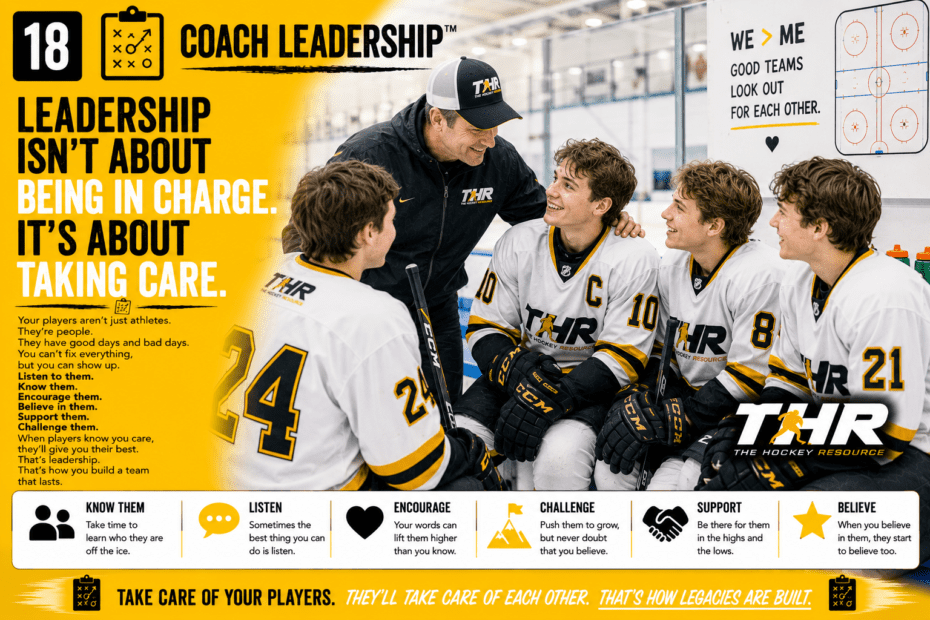
Leadership Is About Taking Care of Those in Your Charge
Many people associate leadership with authority.
Titles create positions.
Roles create responsibilities.
Coaching assignments create expectations.
None of those things automatically create leadership.
A coach may be in charge of a team.
A leader earns the trust of that team.
That distinction matters.
Players can be required to follow instructions.
Athletes choose whether they believe in the person giving them.
Because of this reality, the most effective coaches focus less on authority and more on influence.
Leadership is not about control.
Leadership is about impact.
The Best Leaders Serve Others
Great coaching is not centered around the coach.
Successful leadership focuses on the people being led.
Athletes need guidance.
Players need support.
Teams need direction.
Strong leaders ask different questions:
- How can I help my players improve?
- How can I support confidence?
- How can I build trust?
- How can I create a positive experience?
- How can I help athletes reach their potential?
Those questions shift leadership away from power and toward service.
Consequently, relationships become stronger, and influence increases.
Trust Creates Real Leadership
Authority can force compliance.
Trust creates commitment.
Players trust coaches who are consistent.
Athletes trust leaders who are honest.
Teams trust people who keep their word.
When trust exists, communication improves.
When communication improves, development accelerates.
As a result, trust becomes one of the most important foundations of leadership.
Without trust, authority feels temporary.
With trust, leadership becomes meaningful.
Influence Is More Powerful Than Control
Some coaches attempt to control every situation.
Others focus on influencing behavior.
Influence lasts longer.
Control often creates resistance.
Athletes perform better when they understand expectations and believe in the process.
Great leaders explain why.
Strong coaches create buy-in.
Trusted leaders encourage ownership.
Because players feel included, commitment increases.
The strongest cultures are built through influence rather than control.
Players Watch What Coaches Do
Leadership is observed before it is accepted.
Athletes watch behavior closely.
They notice preparation.
They evaluate communication.
They observe how leaders handle mistakes.
They pay attention during adversity.
For that reason, leadership is often demonstrated through actions rather than speeches.
A prepared coach teaches preparation.
A respectful coach teaches respect.
An accountable coach teaches accountability.
Players frequently copy what leaders model.
Relationships Drive Performance
Hockey is a people business.
Relationships influence development.
Trust strengthens communication.
Communication strengthens culture.
Culture strengthens performance.
Everything becomes connected.
Athletes are more willing to accept feedback from coaches they trust.
Players often respond better when relationships already exist.
Consequently, strong leadership requires connection.
The best coaches invest time building meaningful relationships with their players.
Adversity Reveals Leadership
Winning creates confidence.
Challenges reveal character.
Pressure exposes leadership.
Close games.
Losing streaks.
Injuries.
Disappointments.
Unexpected setbacks.
Those situations test everyone.
Strong leaders remain steady.
Trusted coaches remain consistent.
Successful teams often follow leaders who create stability during uncertain times.
Because leadership is visible during adversity, difficult moments frequently become defining moments.
Leadership Creates Future Leaders
One of the greatest responsibilities of coaching is leadership development.
Athletes learn more than hockey.
Players observe communication.
Young people learn accountability.
Teams experience teamwork.
Leadership lessons emerge daily.
Great coaches understand that their influence extends beyond the rink.
Many athletes eventually become leaders themselves.
Therefore, leadership should be modeled intentionally.
The next generation is watching.
Success Is Not Measured by Control
Many coaches believe leadership means having all the answers.
Strong leaders continue learning.
Trusted leaders seek feedback.
Effective leaders admit mistakes.
Growth creates credibility.
Humility strengthens relationships.
Players respect coaches who remain authentic.
Because of that reality, leadership is not measured by how much authority someone possesses.
Leadership is measured by the positive impact they create.
The Legacy of Leadership
Players often forget systems.
Athletes rarely remember every drill.
Many cannot recall specific game plans years later.
People remember leaders.
They remember coaches who cared.
They remember adults who believed in them.
They remember individuals who helped them grow.
Leadership is not about being in charge.
Leadership is about helping others succeed.
The best coaches understand that influence matters more than authority.
Trust matters more than control.
Service matters more than status.
Leadership isn’t about being in charge.
Leadership is about making a difference in the lives of the people you lead.
PRESENTED BY: thehockeyresource.com and thehockeytournamentresource.com – mark@thehockeyresource.com
As always, thank you for being part of The Hockey Resource community.
You can find all the cards at thehockeytournamentresource.com
GUMROAD – ALL HOCKEY EBOOKS
https://thehockeyresource.gumroad.com/
CLICK LINK FOR AWESOME HOCKEY PRODUCTS – https://thehockeyresource.com/discount-hockey-products-amazon/
CLICK TO SEE MARK ON PODCAST – https://www.buzzsprout.com/1824112/episodes/13519482
Mark Hetherman
Executive Director
The Hockey Resource
mark@thehockeyresource.com
thehockeyresource.com
thehockeytournamentresource.com