

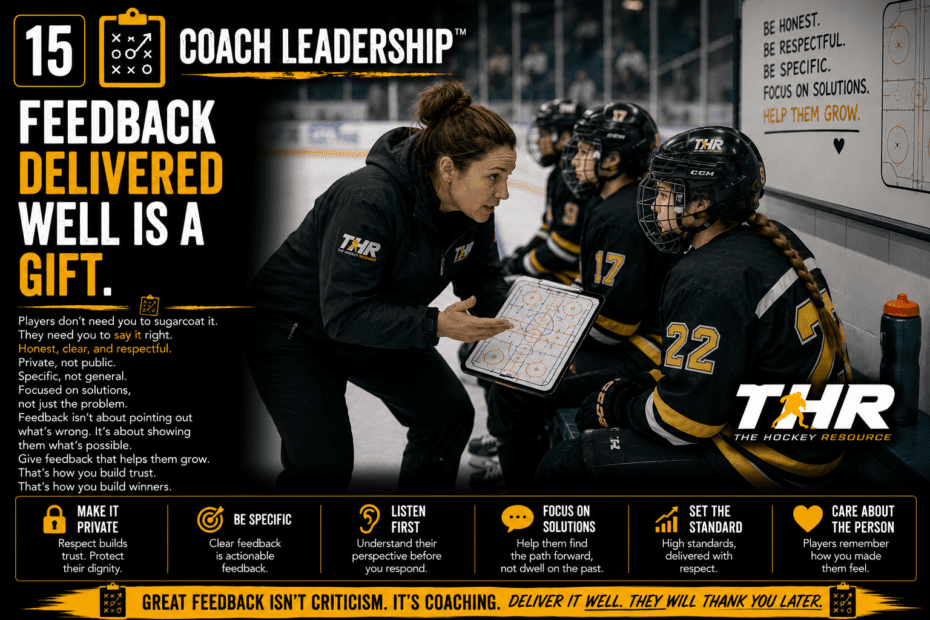
Every Player Needs Feedback to Grow
Development does not happen by accident.
Improvement requires awareness.
Growth requires learning.
Learning requires feedback.
Every hockey player, regardless of age or ability, benefits from understanding what they are doing well and where they can improve.
Unfortunately, feedback is often misunderstood.
Some coaches view feedback as criticism.
Some players hear feedback as negativity.
Many parents worry feedback will damage confidence.
Effective leadership sees feedback differently.
When delivered properly, feedback becomes a gift.
It provides direction.
It creates clarity.
It accelerates development.
Most importantly, it helps athletes become better players and better people.
Feedback Should Build, Not Break
Many athletes arrive at the rink wanting to improve.
Players seek guidance.
Athletes look for direction.
Young people want to know how they can get better.
Feedback becomes valuable when it helps players move forward.
Constructive communication strengthens confidence.
Specific instruction creates understanding.
Supportive conversations encourage growth.
Because of this, great coaches focus on building rather than breaking.
Strong leaders challenge athletes while still preserving confidence and motivation.
Trust Determines How Feedback Is Received
Players rarely separate feedback from the person delivering it.
Athletes who trust their coach are more willing to listen.
Players who believe their coach cares are more open to learning.
Respect strengthens communication.
Relationships improve acceptance.
Trust creates influence.
Consequently, feedback becomes far more effective when strong relationships already exist.
The best coaches spend time building trust before delivering difficult messages.
Timing Matters
Not every lesson needs to be delivered immediately.
Not every mistake requires instant correction.
Certain moments create better learning opportunities than others.
Following an emotional game, athletes may need support before instruction.
After frustration settles, players often become more receptive.
Great coaches understand timing.
They know when to teach.
They know when to listen.
They know when to encourage.
Because of that awareness, feedback becomes more impactful.
Specific Feedback Creates Better Results
General comments rarely create meaningful change.
Specific guidance creates clarity.
Consider the difference.
“Play better.”
Versus:
“Keep your feet moving through the neutral zone and support the puck carrier earlier.”
One creates confusion.
The other creates direction.
Athletes develop faster when feedback is specific, actionable, and understandable.
As a result, clarity becomes one of the most important elements of effective coaching communication.
Confidence and Accountability Can Coexist
Many coaches fear that accountability may damage confidence.
Many players fear that mistakes define them.
Effective leadership balances both.
Great coaches acknowledge effort.
Strong leaders recognize progress.
Successful coaches address mistakes honestly.
Athletes improve when accountability and encouragement work together.
For that reason, feedback should challenge behavior rather than attack character.
Players should leave conversations believing improvement is possible.
Listening Improves Feedback
Communication is not a one-way process.
Exceptional coaches ask questions.
Strong leaders seek understanding.
Effective feedback often begins by listening.
Players may reveal concerns.
Athletes may explain challenges.
Important information may emerge through conversation.
Listening demonstrates respect.
Respect strengthens trust.
Trust improves development.
Because of that connection, feedback becomes more powerful when athletes participate in the discussion.
Every Player Receives Feedback Differently
Athletes are unique.
Some players respond well to direct instruction.
Others require reassurance.
Certain athletes need encouragement before correction.
Others prefer straightforward communication.
Great coaches adjust their approach.
Flexibility helps leaders connect with different personalities.
Personalized communication often creates stronger results than a one-size-fits-all approach.
Understanding players improves coaching effectiveness.
Feedback Shapes Team Culture
The way coaches communicate influences the entire environment.
Positive communication builds confidence.
Respectful communication strengthens trust.
Constructive communication encourages accountability.
Healthy feedback creates healthier cultures.
As players observe leadership, they begin communicating similarly with teammates.
Consequently, coaching communication often becomes team communication.
The culture reflects the leadership.
The Legacy of Meaningful Feedback
Many players forget drills.
Athletes often forget practice plans.
Game scores fade over time.
Feedback that changed perspective is often remembered.
Players remember the coach who helped them improve.
Athletes remember leaders who believed in them.
Former players remember conversations that increased confidence and provided direction.
That influence extends beyond hockey.
Feedback delivered poorly can create doubt.
Feedback delivered well can create growth.
The best coaches understand the difference.
Feedback is not criticism.
Feedback is not punishment.
Feedback is not negativity.
When delivered with trust, respect, clarity, and purpose, feedback becomes one of the greatest gifts a coach can give.
PRESENTED BY: thehockeyresource.com and thehockeytournamentresource.com – mark@thehockeyresource.com
As always, thank you for being part of The Hockey Resource community.
You can find all the cards at thehockeytournamentresource.com
GUMROAD – ALL HOCKEY EBOOKS
https://thehockeyresource.gumroad.com/
CLICK LINK FOR AWESOME HOCKEY PRODUCTS – https://thehockeyresource.com/discount-hockey-products-amazon/
CLICK TO SEE MARK ON PODCAST – https://www.buzzsprout.com/1824112/episodes/13519482
Mark Hetherman
Executive Director
The Hockey Resource
mark@thehockeyresource.com
thehockeyresource.com
thehockeytournamentresource.com